[00:00:01] Speaker A: Hello my friends and welcome back to Movie Deputy Reviews, where as you can tell, today we're not talking about one of the newest movies, but we are talking about one of the newest ones to be available on digital.
I tried to get to the theater tonight to see some and there are some other events going on downtown and I was not able to get to the theater as planned.
So plan B. But I will have a new one for you tomorrow, so you want to be sure to come back and check us out for that. But like I said, this one is new to digital.
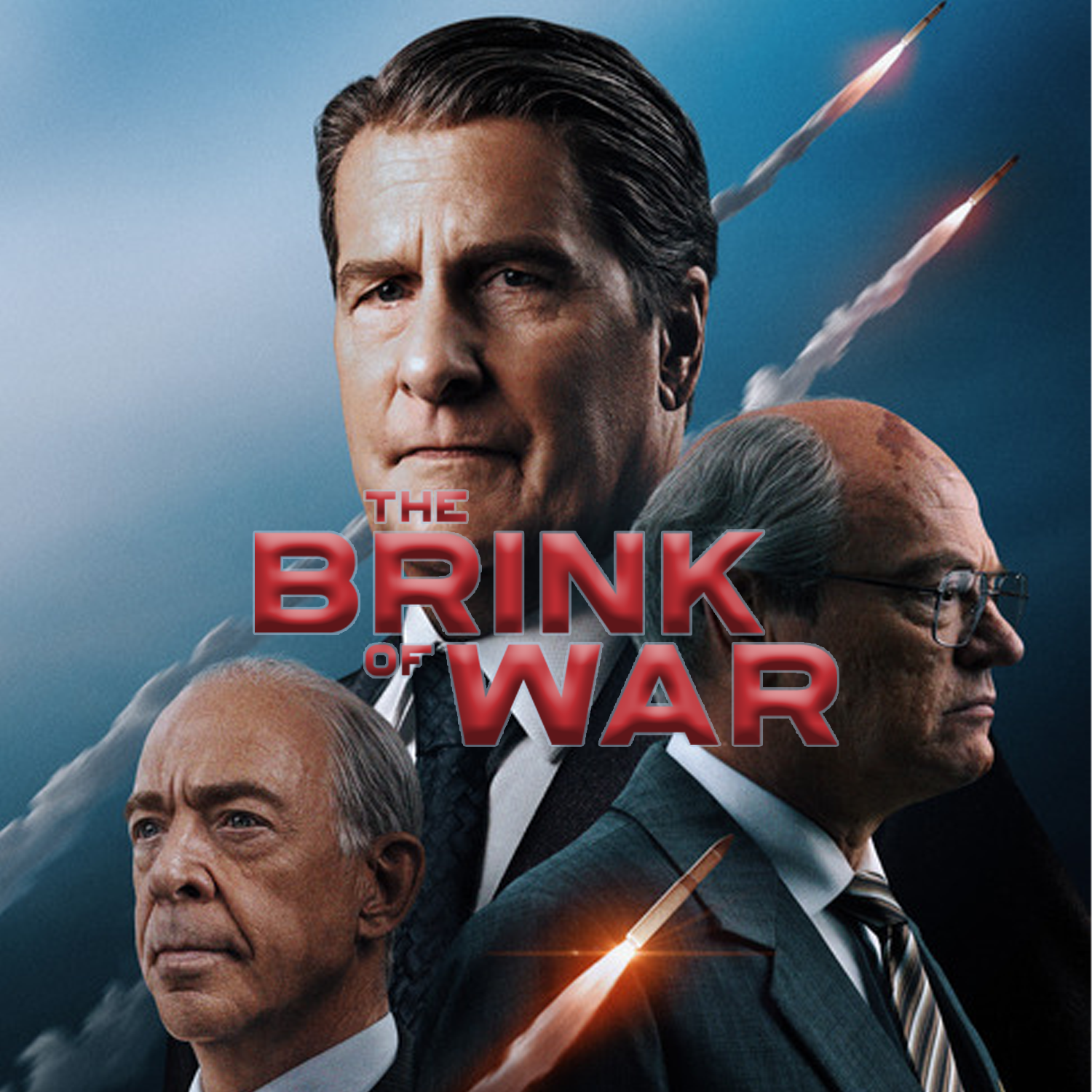
So if you were at all around during like the Reagan, Gorbachev era and kind of all of that, you'd understand why. This is titled the Brink of War. This is an Angel Studios production. And I did something a little bit different with this one today. I kind of took the notes that I took when I watched the movie and I kind of summarized them in a word doc a little bit just so I could kind of keep my thoughts flowing maybe a little bit better since my brain is still a little bit scatterbrained. But I wanted to be sure to kind of keep everything kind of flowing a little bit better. I do remember calling this movie both, or I'm going to refer to my notes here. I referred to this movie as both exhilarating and what was the other word I used? Exhilarating and uncomfortable. Yeah, that's right, because it's definitely both. It's exhilarating and very uncomfortable. Especially if you lived in the. If you were around in the 80s when this was going on, if you were not around in the 80s, then this is quite going to be quite an eye opener because this was back when the Soviet Union was not Russia, it was just the United States, Soviet Union to the ussr and all of this was going on with America. And it was just that we were literally on the brink of a cold war.
And I don't think people nowadays quite realize how kind of sketchy this got as it went along.
But before we get too deep into the review, I do want to say I gave this a guilty rating. But you're not going to find out the score till a little bit more into this.
But let's check out the trailer together and then we'll talk about the movie a little more. Come along with me, we'll check it out.
[00:02:07] Speaker B: We face an enemy that is ever growing.
We need to protect the American people.
[00:02:17] Speaker C: President Reagan, you've got us here, sir.
[00:02:22] Speaker A: Now you may be noticing something. In here we see Jeff Daniels playing President Reagan and just recently we had.
Oh no, my brain is going to completely blank.
We saw Dennis Quaid playing President Reagan in the Reagan movie. Now why didn't they use the same actor for both?
That I do not know. But I will say both did an excellent job.
[00:02:48] Speaker C: You got the Russians to the table.
Gorbachev came to play.
But if we fail here, there will be war.
[00:03:00] Speaker B: Of all the places on earth you could pick for a meeting about the fate of the human race, you picked a house in Iceland.
[00:03:07] Speaker C: Perfect for security.
[00:03:10] Speaker D: Good to see you, Mr. President.
Giovanni. Always looking for the advantage.
[00:03:18] Speaker C: I never imagined I'd see the controls for 70,000 nuclear weapons in the same room.
[00:03:25] Speaker B: Here we are, the two of us, deciding whether there will be peace or war in the world.
[00:03:30] Speaker D: We have tens of thousands of nuclear warheads all pointed at each other.
[00:03:36] Speaker B: Why don't we just get rid of all of them?
Every single nuclear weapon on Earth. Gone.
[00:03:47] Speaker D: This is a fantasy.
You have come in here with a fantasy.
[00:03:52] Speaker B: I know how lonely the job feels
[00:03:54] Speaker A: being responsible for millions of people.
[00:03:57] Speaker C: The Russians will not listen unless we are strong.
[00:04:01] Speaker D: You have a history of suspicion of us.
[00:04:04] Speaker A: He is scanning all our communications.
[00:04:06] Speaker D: How do you expect my people to trust you?
[00:04:10] Speaker B: The United States will remain strong. We can strike you first with impunity.
[00:04:16] Speaker D: We won't strike as well.
[00:04:19] Speaker C: The arrogance of the Americans.
We are strong people.
And we have learned that strength is how you win a war.
[00:04:33] Speaker B: We're not trying to win a war.
We're trying to end one.
[00:04:50] Speaker C: Now streaming exclusively on Angel.
[00:04:54] Speaker A: And you can stream this in other places as well. I think this is available just on regular couple streaming platforms as well.
But that thing is that line. And when I was in the movie, it gave me goosebumps. And even just listening to it in the Trigger again, it gave me goosebumps.
We're not trying to win a war, we're trying to end one. Like the people. A lot of people nowadays do not realize how close that we came to this Cold War.
Think of this. I mean, having the footballs for both countries, for their entire nuclear arsenals in the same room.
And what that power represents and what that represents as a movie. A lot of people don't even realize that this meeting even happened.
They. They. There's. I was dumbstruck when I saw this in the theater. Actually saw this actually before I got sick. But I'd just been like, wait. I don't know why I was waiting to do the review, but I guess it's probably a good thing I did.
But this one was just. I was amazed at how many people were like, oh, did this even happen? It was probably just Hollywood making up. No, this really happened.
And that. It just boggles my mind that our history is so watered down anymore that we don't. That it doesn't even teach things like this.
That we have to be taught this by the studios, we have to be taught this by angel, we have to be taught this by Hollywood.
No, I'm not lumping Angel Studios into the rest of Hollywood. No, don't get me wrong.
But the fact that this has to be brought to us on the big screen for people to realize that this is part of history, it's kind of sad that, I mean, history isn't taught the way it should be taught. That we don't teach the basic things of this country. We don't teach the basic things of what. What's been. What's happened with this country, with, with our enemies and with our colleagues and with our. And kind of basically with the world.
We are looked down upon by a lot of the world and it's.
A lot of it is because of misinformation and it's really sad.
It's despicable.
There's, there's no, There's, there's no real way to put that into words.
It's just there. Something needs to happen.
Does that begin at home? Does it begin in the schools?
Don't even get me started on public schools. So, I mean, but let's get into a little bit more of this movie because I could sit here and just rant about history and how it's taught and what is taught.
I could literally rant on that for probably an hour, but I'm not going to do that. But this movie, if you like history, if you like learning the truth about history, is this movie 100% accurate?
Very few are.
Even documentaries get stuff wrong.
So there's missing pieces even in this, which we're going to talk about here in a second. But as a whole, this opens your eyes to a pretty major thing that happened. So like I said, if you are at all interested in history, if you are at all interested in Russia, if you are all interested in the Cold War, this is a movie that you're going to want to check out.
Like I said, I kind of consolidated my notes, kind of helped me just kind of keep things and I just, just kind of got going. I did my voice to speech dialogue thing. And so I'm just now reading this as I am like scrolling through this as I'm looking at it on my Screen going, why didn't I proofread this?
That's one of those things. But the speech to talk on my phone, it's great. I love. Don't get me wrong, I love my phone, but it's.
It's got some flaws.
But here's kind of the way I just kind of summarized it up with my notes and everything.
I used to just type out all my reviews in 300 words or less. I used to just kind of put it all out there. And that way I could, like, correct things if I wanted to correct them. But I wanted to bring things to you completely unscripted. And this is still unscripted because this was just me talking into my phone. I'm just going to be relaying.
I kind of was on a roll with my thoughts and stuff on this and just. I wanted to keep that momentum. And so you're gonna have to let me know. Do you. If you're gonna like. After I do this, if you're gonna like this way more, if you would just like it when I just talk off the cuff and just talk about the movie, I would really love to know what you prefer. If you prefer, like this one where I jotted down my notes and I'm gonna share them with you, or if, like I said, if you just prefer where I just kind of wing it and just talk about the movie.
But let's try it this way, at least to see how it goes.
This story puts a very human problem at the center of a frightening situation.
How do you trust someone that you've spent years treating as your enemy? This was set in 1986, Reykjavik. Now, where's Reykjavik? It's in Iceland. If you did, a lot of people, surprisingly, probably wouldn't know that, but this follows Reagan and Soviet leader Michael Mikhail Gorbachev as they negotiate over the nuclear weapons. Like I talked about those two footballs that they were talking about holding. You don't have to know every detail of the Cold War to understand the stakes that these men are debating.
And these men have to find a common ground.
And neither one can afford to look weak. So how is that going to happen?
This shows the frustration, the hesitation, the quiet reactions.
You've got these big speeches going on and you've got all this intensity, and then you have the moments between.
And it just really has the potential to struggle to find its place because you've got pride and you've got difficulty listening and you've got just two bulls basically butting heads.
And they're both just frustrating each other. To know at in this conversation, but it's the moments between those conversations where some of the biggest things happen. It's not necessarily face to face at the table. It's the moments in between.
And sometimes it's the moments just in between the talking, in the silence that sometimes the most ground is made. Now does that make sense? It probably doesn't seem to, but trust me, for a movie like this, it really does.
Now, a drawback that this really doesn't just automatically talk about is, like I said, those moments of silence, the moments in between the dialogue, because the momentum is really undulating. It really goes up and down. It's like, it's really intense and then it backs off and then it's really intense again and then it backs off and it kind of goes through that. And then even on the times when it backs off a little bit, we see a little bit more intensity between their wives because one of their wives has a little bit of a power struggle with the other one. And it's just kind of a little bit of a game of like, haha, I know better than you do. Only they didn't.
But it's just the whole power struggle. It's like we see the power struggle taking place at the table between Reagan and Gorbachev, but we also hear the power struggle taking place on the phone between the wives.
And it's just. It's like, okay, who's gonna be on whose side here and what's going on? But you really feel the weight of everything that's going on.
Now, the biggest, biggest, biggest, biggest, biggest probably error in the entire movie is when this happened in real life.
There was a third person, or fourth person, I should say, because you see the three in the poster. There was a fourth person that was also very much involved with a lot of this. And that was Roxane Ridgeway. A lot of people don't know who that is. And she was a diplomat, but she was a very key point to this actual conversation. And she was basically omitted from this. Why?
I'm not the producer, I'm not the director, I'm not the writer. I have no idea. Does it take away from the story? Not really. Unless you know that she was supposed to be there and then you're going, okay, where is she? I think so. That's one of those little moments that just.
It boggles my brain.
It's like. It's one of those things that I kind of remembered and I had to honestly look up her name, but I remembered that there was another person involved. And so I had to go back and look up the name, but it was Roxanne Ridgeway.
And it's just. It's not something that would bother most people. But like I said, it doesn't add or take away from the story. Like, unless you knew that she was supposed to be there. And then it just is kind of one of those. It's an itch in your brain that you just quite can't scratch. It's there, but you want to get it. And you're just like.
But what this ultimately comes down to is an appeal to each other. It's an appeal to humanity. It's an appeal to just trying to find what's right. And it's like, okay, we have the power to end this right here. Should we. And just even that put forth and which one puts that forth, you'll have to figure. You'll have to watch it and figure it out. But even that causes a power struggle because these two men are their. Their number one mission is to protect their nation. They protect their country, to protect their people.
And they think they're doing all that they can to do so. Now, one wants to do it on the case of freedom, One wants to do it in the case of communism. Okay, that's obvious which one's which.
But how this kind of goes about doing this and what this brings forth and that intensity that I'm talking about really is why this one is. It begs to be watched, it begs to be understood.
It's like reaching out. It's reaching through the screen, it's reaching through the dynamics, and it's pulling you back.
Because this is one of those ones you.
If you have any interest in history at all, this is one that you want to check out. Because there, even though it doesn't get everything 100% right, it has enough of it that you just.
You. When this is over, you have goosebumps.
That probably gives you a little bit of an idea where I'm at on the score on this one. I'm gonna probably surprise a few of you with this.
Score wise, I'm in the watchable, memorable plot with some questionable content.
Those that know the Deputy scale know I am in the sevens on this movie. And I am coming in with the brink of war at a 7.5 out of 10 on the Deputy scale.
Now, with the guilty reading, there's some strong language, there's some other scenes and things like that that may not be the most suitable for younger audiences or the younger audiences may not even fully understand. And grasp as well.
But for if you have ever had any interest in history, or any interest in America or Russia for that matter, this is definitely one that you're going to want to check out. So as always, if I would like to say I want to know which way you prefer. If you just like my off the cuff stuff, if you like the stuff where I go more off my notes and do it that way, I would really love to know on that. So please reach out to me with the feedback. Tag me on social media or just message me
[email protected] if you haven't done so already. Make sure you click like and subscribe and turn on that notification bell so you get the latest and the greatest Movie Deputy content as I interrogate these movies for their plot and content.
As always, I will be back soon and I'll talk to you later. Bye.